Tuesday, September 5, 2017

Everything wrong with Coke Studio's Saiyonee.

Over the years, Coke studio has recreated some of the most celebrated melodies from yesteryear, most of which eventually turned out to be grander than the original ones in terms of uniqueness and freshness without taking away any credit from the original composers and singers. However, in a recent episode of season 10, the production team experimented with Junoon’s hit number of 90’s ‘Saiyonee’, and missed the bull’s eye by good few miles. If a listener has to go back to original version after listening to the newly composed version, it shows that the newer version needs detoxification from minds and has not worked out at all. You don’t fix what’s not broken, and that’s what Salman Ahmed and Strings just did with Ali Azmat’s masterpiece.
To start with, it was hard to digest the lineup of performers slotted for this song. They got the wrong Ali for the rendition. Why not Azmat instead of Noor? Ustad Rahat Fateh Ali khan, the king of classical music for a song of this nature was a massive gamble. Salman Ahmad was the original Junoon band guitarist and a part of original ‘Saiyonee’, also credited as composer for this Coke Studio’s version. Watching him without Ali Azmat’s presence was a major disappointment. We know that the band parted ways long ago but growing up listening to and watching the original version with both of them on screen was nostalgic and absence of Ali Azmat, who was the soul of this song was frustrating. Considering Ali Azmat is still around and has performed in previous few seasons of Coke Studio, including the inaugural one a decade ago, only Ali Azmat could have pulled off an Ali Azmat and the production team should have roped in none other than him if they wanted to renovate the old version.


I presume the idea was not to recreate the original with original but with something versatile in shape of classical Rahat Fateh Ali khan, which was fair enough. However, it did not materialize well. The rendition started off promisingly and the first sixty seconds were the only positives out of this version. Rahat Fateh Ali Khan was expected to stick with the classical parts and Ali Noor was thought to take over the high pitched note, but when Rahat continued towards the ‘saiyonee’ part, the song was done there. It is beyond comprehension why someone would come up with an idea of replacing Ali Azmat’s part of ‘saiyonee’ which he sang on top of his lungs, with a voice which is best suited for classical melodies and is too soft for a song like this. Horses for courses is what Coke studio producers needed to understand before muddling with the song in name of ‘experiment’. The classical build up towards the part which was mastered by Ali Amzat was encouraging and audience were hoping for more energetic take over perhaps by Ali Noor or even Salman but they were left with nothing except a dull and soft note by Rahat. There can’t be a better metaphor for this disappointment other than a pre-mature ejaculation. Nothing against Rahat, he is a very fine singer but with all due respect, his voice was too feminine for the crucial part of this song. He tried his best to do justice with the original version, even tried hard to screech in his signature style, but original masterpieces can never be replaced and forgotten that easily, and they do nothing but to raise the bar for people who would try to recreate them. Ali Noor did well for most of his part but was also seen struggling when it came to more intense notes, or may be Ali Azmat had set the standard way too high. Although in terms of stature in musical world, Rahat Fateh Ali khan may well hold a much exalted position, but when it comes to Sufi rock and ‘Saiyonee’ in particular, Ali Azmat’s were too big shoes to fill, even for someone with Rahat’s caliber. 


Friday, July 17, 2015

Health Care System: Money Making Machine?

As a child, I did not choose to arrive in the world. I was rather planned because a child is one who completes a family, who is a bliss for the household and whose arrival marks the transformation of two partners into parents. It took about nine months for nature to convert me from a zygote into a fetus. Womb of my mother was embarked as a nurturing platform for me where I was entitled to receive all the basic necessities and ‘infrastructure’ for my construction into a human being. I was getting oxygen, blood, fluids and nutrients for the development of vital organs, flesh and bones, all by a complex and mind-boggling mechanism, without any cost at all – or may be just at the cost of my mother being sick and in pain for a few months. But as soon as I was exposed out of the beautiful, bountiful and magnanimous territory of mother’s womb, I was baffled to know that my father is out there at the admission office of this private hospital and paying fifty thousand rupees just to get me out from a place where I have been getting all the luxuries for free. I cried immediately after I was delivered and handled by an obstetrician.


They say a child is normal if he/she cries right after the birth, true that, but why does the child cry at birth is a question that needs to be answered. Even Adam and Eve kept on crying for good forty days when they were expelled from heavens to earth because that had put a full stop on the uncountable luxuries they were getting for absolutely nothing, and now they had to make an effort to earn the basic necessities, let alone the luxuries. I, too was expelled from my heaven into a place they call the ‘world’, even the first sight of which was so scary that it made me close my eyes and cry inconsolably.


On one hand my father was getting his wallet shrunken over my pampers, clothes, cradle and all the other things that were necessary for me to survive in an alien world, while on the other hand he also had to pay whenever my blood samples were taken, he had to pay every time my fragile skin was pricked with a needle, he had to pay for knowing what my blood group is. The only two constituents that were available for free were air and mother’s milk, thank heavens both of these were not under the control of hospitalists, although I could hear out one newborn in the neonatal ward who was born with premature lungs and had to be intubated – the price of each molecule of oxygen being delivered to the baby was being charged. As I was growing, I was being frequently called to get vaccinated against some of the deadliest diseases, of course in exchange of some bucks. By this time I started to realize that staying healthy was a business deal, invest with money and you get your license to health. This, however, was one side of the coin, being unhealthy was also charged, and for a lot more.

Seasons passed by year after year, different phases of life elapsed, from an infant to boy to adolescent to man, from circumcision to routine fall from the stairs, from wasp bite to falling from bicycle, from seasonal flu to acute gastroenteritis, frequent visits to the hospitals were made in order to repurchase health. People around me developed comorbidities like diabetes, hypertension, heart issues and a few other technical entities, and were put on lifelong medications, sometimes expensive, that had to be taken regularly with frequent follow up visits. I developed atherosclerosis, (narrowing of blood vessels due to accumulation of lipids) thanks to the fatty content of food in my part of the world. I belonged to a middle class, hand to mouth family. After the demise of my father who himself was a self-made person, I carried on with my government job until the age of retirement which is 60 years. In the meantime, I fulfilled my responsibilities as a father by providing my children with all the comforts, sending them to top universities and getting them married in the most lavishing manner. Such was the weight of paternal obligations that I even forgot to worry about my own health insurance.

Hospital charges were multiplying day by day. It was the 3rd week of hospitalization after an attack of stroke which lead to massive brain hemorrhage. I was in a deep state of coma. All different sorts of machines were at least keeping my breaths alive. Prognosis at the age of 75 is not too reassuring but many people recover with the advancement of science and technology. If the charges of 3 weeks were not daunting enough for my children and the little savings that I had, the neurosurgical intervention as a final life-saving option was definitely out of reach for us. How conveniently my children were asked to take me to some other hospital as they were not able to bear the expenses anymore. To be precise, if you can’t afford to live, you will not be seen and saved by the doctor.


Why one should pay if he gets sick? Has he done it on purpose? Is he getting gratification by being in pain? Is the doctor doing any favor by treating a patient? Does is not come under his professional duty? Isn’t humanity mightier than some pieces of paper? Should those who cannot afford to bear the expenses of surgical procedures of life threatening conditions be allowed to die? Where goes the Hippocratic Oath when a patient is in emergency, dying of abdominal trauma leading to internal bleed and you are not starting emergency laparotomy just because the patient is non-affording? How merciless can you get? Doctors were once known as the Messiah’s, who would bear and relieve the pain of those in pain, but now with the commercialization of health and development of private set ups, the whole system of health care providing has become no less than a devil’s workshop, where everyone involved is making merry with the money of those in pain.


Wednesday, June 10, 2015

Crazy Abdullah in a Stranger's Wedding

It all starts with the mutual agreement of two families, irrespective of any of the two possible triggers leading to the auspicious occasion of a marriage. Arrange marriage, more common of the two, is still the orthodox way of tying the knot between those two ‘innocent’ people who are offered as sacrificial lambs in a collaborative ‘business deal’; lambs that are not to be slaughtered straight away, but to die a slow painful death of bearing rest of their lives in a compromise and having to share a bed with a complete alien person as a result of some lucrative treaty being signed by the third and fourth party. Love marriage, the second trigger, although having lower incidence than the arranged one, is still considered a taboo in our society and is also more complicated out of the two. The pattern usually takes a script straight out of the typical Bollywood movies; the girl’s rich father doesn’t let his ego approve a hand to mouth son-in-law; the girl’s having overly protective brothers who want to exhibit their effort of vigorous work outs in gym by taking down the heat on some soft target; Or the boy’s mother, who has already fixed the marriage of his son with his ‘khala ki beti’ and be like ‘main tou shehnaz ko zubaan dey chuki hoon tere paida honay se pehle’. The hurdles, however, are overcome if the couple remain steadfast and stubborn, ultimately the families agree and succumb to the ‘dheet-ness’ of their children, ending up in an outcome similar to the arranged marriages; ‘Lijiyie, Moo meetha kijiyie’.  


The next phase subdivides the family members into different zones according to their respective state of minds. There is a beginning of unsurmountable competitiveness when it comes to the ladies and their long list and complexities of dresses for rest of the long wedding season among themselves. The struggle begins for searching diverse set of clothes, shoes, jewelry and all other accessories for each day of the never ending functions. There has to be a different hairstyle for each event, making sure it’s from a different saloon. Dresses should not be from the same outlet as it would be too mainstream. Sandals should not be from the same brand to avoid the label of being ‘cheap and outdated’. Everything has to complement each other in terms of shades, color and texture. Above all, special care needs to be taken for maintaining uniqueness while choosing the desired products to avoid the much familiar complaint ‘meri kameeni behan hamesha meri copy karti hai :@


The boys, mostly brothers of the demanding sisters and sons of the insisting mothers, are amongst the inevitable sufferers. Their social life takes a back seat for good few weeks as they take on the job of unfortunate driver who are being instructed to take the ladies to various/every shopping mall in the city. First few visits are merely meant to get an idea of the prices and quality – basically a comparative survey. The real shopping starts after a vulture-istic inspection and cent percent satisfaction. The boys will be ordered to drive 5 miles extra if that shopkeeper is selling a dress with a discount of 100 bucks – because the car runs on water according to their logic and saving 100 bucks on a dress is a bigger achievement, doesn’t matter if the shop falls out of the way, a discount is a discount! The sisters prepare a playlist of their own and hand it over to brothers telling them to copy all the songs in a USB after browsing through their music playlist, internet and taking feedbacks from their wide social circle. The playlist consist of latest ‘latka-jhatka’ songs which they think will be most appropriate to exhibit their moves, and so the dance-practice-cum-slimming-exercises sessions start. While the race of acing the dance steps and fitting into the new outfits is initiated for girls, the boys are handed over with another list – the ‘chosen’ relatives and friends to be invited, and asked to order the wedding cards to get printed according to the number of expected invitees. Boys ultimately get their reward at the brink of wedding when almost all the ladies issues have resolved. They are taken to the gents outfit, only to get the clothes after approval from the ‘bossy’ ladies, ‘ye color nai suit karta tumhare sath, hamesha black kyu?, gray mai buddhay lagtay ho, iss mai kalay lagtay ho, uss mai charsi lagtay ho, aisa stuff pehle bhi pehntay rehtay ho, ye wala le lo tumhari apni shaadi pe bhi kaam ajayega, aur khabardaar jo jaw-line banaai, clean shave karna!’


The father, who has played a role no different to an ATM machine up till now, gets the privilege to choose the design of wedding card (after the choice has to be narrowed down to two by the ladies in the house and they can’t decide between the final two). He is like that principal of the college who is the center of attention before an approval of a trip but is sidelined once the green signal is given. He is busy quarreling with his wife over those relatives who must and who must not show up in the wedding. The wife doesn’t approve the presence of his hubby’s ‘phupho ki beti’ who once in a lifetime was a candidate to be the wife of his existing husband and is now a grandmother herself, but the wife still sees her as a potential threat because women of all ages are insecure, and secondly the star plus effect should be instilled in a wedding because ‘wo shaadi hy kya jis mai khaandaan waalon ka drama na ho’.


The much awaited day finally arrives (the first of the few to follow). Two concerned fathers are even more concerned. The mothers are conscious of each other even though both of them are heavily studded with all the required (and not so required) accessories. The girls are exhibiting their beautiful clothes to their friends and to the professional cameraman because having a ‘DP material’ by the end of the event is like a religious obligation that has to be performed. The boys are multitasking – managing the tasks given to them by the parents and also keeping their eyes cool by ‘taarhofying’ chicks. The ‘Larkay Walay’ have their necks an inch or two longer and stiffer than their counterparts for some strange reasons. It is the time of entry of integral part of the wedding; no you guessed it wrong, it’s not the bride or groom, it’s the guests, the honorable guests, without the presence of whom the event is next to impossible. All the fuss that has been described earlier was to impress these people as they are not the simple guests, they in fact are the analyzers and have come not to congratulate or eat (well of course that’s one of the major incentive), but the main goal is to scrutinize the whole event with their critical eyes.


The dholkee’s and mehndi’s are the best stage to show the hidden ‘Nargis’ in all. Every one moves their feet to the tunes and shake their hips depending on the level of excitement. Most people, however, do intense bhangraas, thumkaas and luddi’s ‘jese unki apni phuphi ka viyaah ho’. The next day on baraat is when most of them are licking their lips. The Larkay Walay are eager to check out the entire family and links of the Larki and vice versa. Baraati’s are ravishingly dressed up, not any different from the groom and his immediate family members. Larki walay are ten times more eye-catching in their appearance and beautiful girls are lined up in parallel rows with flower petals in their hands, anxiously awaiting as if Prince Williams is about to enter riding a unicorn. The girls seem more eager than the bride herself to see how the ‘dulha BHAI’ looks like. Finally the groom along with his battalion arrives in an attitude comparable to Sultan Rahi when a 90 kilogram heroine used to dance around him in good old maula jutt type movies and he used to be as stiff as a rock, and all the ways of seduction by Anjuman used to go in vain.  Initial assessment of groom and his family starts and their evaluation gets underway by the welcoming girls. They are all then given a seat to be gossiping stock for the guests of larki wala’s till the bride is in the makeup room. The Larkay walay, however, keeps on checking out girls, and the elderly kill their time by keeping a close eye on the family of bride.  So the party doesn’t start till the dulhan walks in.


 Entry of the bride triggers the meta-analysis. A string of comments are initiated such as ‘Wese dulhan zada pyaari hai’ by those who are Pro-Bride, while the Anti-Bride group is like ‘Dulhay ki maa lag rahi hai, itni barri hai’. Other common comments include ‘Bilkul bhi acha make up nahi kiya hua’, ‘kitna dark shade use kiya hua hai’, ‘dress bohat pyaara hai, konsay boutique ka lag raha hai?’, ‘suite nai kar rahay dono, hoor k saath langoor betha hua hai’, ‘larki barri chalaak lag rahi hai, baich k khaa jayegi larkay waalon ko’, and khala’s phupho’s are like ‘iss churrail se tou achi meri beti thi’. The next couple of hours are spend in the photo session where dulha and dulhan k maa baap, behn bhai, behn ka susraal, khala phupho khalu phupha with their kids and kids ke kids, maamu mumaani and their kids, chacha chachi and their kids, taaya taayi and their kids, nana nani, dada dadi, cousins and their friends and susraal walay, neighbours, collegues, friends, acquaintances, kaam waali maasi and their family, driver and their family, and all the other possible relations take turns to have a picture on stage with the couple. By the end of this extended session, the couple who has been faking up with their constipated smiles, develop risus sardonicus. The Valima is also an extension of the similar comments, although in a much calm and composed way as most of the discussion has been done overnight. The focus this time is on the public display of affection of bride and groom, ‘dekho kitna chippak kar bethay hain, kesay hans hans kar baatain kar rahay hain, larki mai zaraa bhi sharam nahi hai, kese ganday poses mai tasveerain khichwa rahay hain, lagta hai pehle se dono ka chakkar tha’. It is followed by a comparison between baraat ka khaana and valeemay ka khaana and ends at the final comments on the music, dances, interior designing, marriage hall, food, appearances of Bride, her father and mother, her sisters and brothers; Groom, his father and mother, his sisters and brothers, and the relatives in general of the counterparts. Ultimately, all the pre-wedding khuwaari’s make sense. Those were all done for a reason; to silence the critics in disguise of guests.


Wedding abroad is a beautiful and simple occasion where two soul-mates vow to remain in a bond of love, trust, care and loyalty for the rest of their lives. It’s a special occasion in the lives of two people who are starting a new journey together and they are the center of attention in a small yet a meaningful and a genuinely well-wishing crowd. People hardly discuss how the bride and groom are appearing, how the respective families are dressed, what is being served at food and where the event is taking place. Everyone is out there to make it the most memorable day of the lives of two people, and every other person will be saying ‘it’s the best couple ever’. No one will ever be judgmental and keep their worthy notions to themselves. That’s the reason why the weddings abroad are much simpler, economical and have less hustles and bustles.


The reason why our weddings are more complicated is because of these ‘baygaani shaadi mai Abdullah dewaanay’, who will first dance like it’s their ‘maasi da viyaah’, and then gossip around. It’s because of the fear of these people and anticipation of their critical gossips that the concerned families go out of the way in making efforts to silence the crowd with awe and don’t give them a reason to open their mouth which is next to impossible, no matter how perfect the event turns out to be. People need to understand that two people are beginning a new journey and they need to be well wished with sincerity. Being bitchy is not going to do any good to anyone. The focus of attention should remain with the wedding couple in all the positives ways and the people should not stick their nose in a special life event of two people. After all, it’s not your own wedding and you don’t have to act crazy.


Friday, January 18, 2013

French revolution RIP

The breaking news is that the famous French revolution (1787-1799) has decided to withdraw its chapter from the history books due to embarassment after witnessing the 'Revolution' of Islamabad led by Dr. Tahir ul Qadri. 

What a waste! 5 days of powerful anti-government speeches, vows upon God and the holy book, charges of corruption, number of women infants and elderly in intense cold weather of federal capital under the overcast and at times raining sky - chanting for a revolution that would change the system and bring them food, water, shelter, employment, electricity, gas and sense of freedom from the long-lasted hanging sword of terrorism, but the outcome was a 'Muk-Muka' - a consensus to which Dr. Qadri was against throughout his long march - with the same corrupt government. The original slogan of 'Save State instead of Politics' was optically isomerized to 'Save Politics instead of State'.

The so-called revolution promised a lot; attracted an ocean of masses; showed beautiful vivid images of a better future, but failed to live up to the hype that was generated. It ended up like such a movie - the trailor of which created raves but turned out to be a disaster itself upon a complete watch. Revolution does not end up in a consensus with the accused and with those against which the protest is being done. If this was really a revolution as tipped by Dr. Qadri, then the strugglers of French relovution will surely be tumbling over in their graves. 


Tuesday, August 14, 2012

Addison's Disease

The patient who is shown below, a female of 59 years of age, presented with following signs and symptoms in Medical ward in one of the leading government hospitals in Islamabad:

* Fatigue
* Muscle weakening particularly of lower limbs
* Loss of Appetite
* Weight Loss
* Vomitting
* Constipation
* Persistent Hypotension (low blood pressure)
* Altered taste and sense of smell
* Depression
* and the most striking one was the altered skin colour. Hyperpigmentation of skin of both exposed and unexposed parts. On examination, the hyperpigmentation was appreciated more on knuckles, elbows, lips, buccal mucose and also on the palmer creases. 

According to the patient and as seen on a picture brought by the her that was taken about two years back, her skin colour was normal. She complained of generalized blackening of skin that started to appear throughout her body at the same time.


Diagnosis: Adreno-Cortical Insufficiency or Addison's Disease.

Addison's Disease, also known as Adreno-Cortical Insufficiency, is due to the destruction or dysfunction of the entire adrenal cortex. It affects particularly glucocorticoid and mineralocorticoid function. The onset of disease occurs when 90% or more of both adrenal cortices are destroyed or dysfunctional. It tends to be more common in females and children.

The most common cause of Addison's Disease is Idiopathic autoimmune adrenocortical insufficiency resulting from autoimmune atrophy, fibrosis and lymphocytic infiltration of the adrenal cortex usually with sparing of Adrenal Medulla. Idiopathic autoimmune adrenocortical atrophy and Tuberculosis account for nearly 90% of cases of Addison's disease.

Due to destruction and dysfunction of Adrenal cortex, there is diminished synthesis of glucocorticoids, mineralocordicoids and androgens. Decrease in the level of cortisol sends impulses to pituitary gland which produces ACTH in more than normal amount in order to compensate for diminished levels of cortisol in the body. But since the cortex is dysfunctional, elevated levels of ACTH are of no use. ACTH affects the melanocytes by a complex molecular mechanism which causes hyperpigmentation of the entire body.

The signs and symptoms of Addison's Disease are as follows, compare them with those of the above mentioned patient:

* Hyperpigmentation of skin - most obvious on mucous membraness, palmer creases, knuckles and extensors.

* Musle waekness, fatigue

* Weight loss, decreased appetite

* Low Blood pressure

* Craving for salt

* Nausea, Vomitting and occasional diarrhea.

* Depression

* Loss of pubic and axillary hair

* Loss of Libido.

* Hyperkalemia

* Hyponatremia

Although very rare, Addison's disease is a very important clinical condition and a case in general ward in a hospital of Islamabad, Pakistan, suggests that this autoimmune disease is no longer a rare one.

Sunday, August 5, 2012

'BHAABI'


‘Bhaabi’   that saintly and praiseworthy figure which has a remarkable impact on all those with whom this high stature dignitary is closely associated and linked. ‘Bhaabi’ – that glorious and charismatic personality which every nine out of ten guys are privileged to have and is that admirable as well as the notable figure which shadows upon the heads of every guy with the ultimate respect and affection, that is well and truly comparable to that they have for their mothers; well that’s an exaggeration. Such is the esteem of ‘Bhaabi’  - the Sister-in-Law, and as we call it in Urdu language.

‘Bhaabi’ is classified into two main types. First is the one which is related to one’s blood; A brother’s wife. Although this specie of ‘Bhaabi’ is endangered these days, they still acquire a very high rank in a family. This kind of ‘Bhaabi’ attains this high status after going through a long and systematic process of various customs and traditions. This class remains permanent throughout life on most occasions so we can most certainly say about this type of ‘Bhaabi’ that “Once a Bhaabi, Always a Bhaabi”.

The first type is followed by the all important second type of ‘Bhaabi’. These ‘Bhaabies’ can be found in any college or university campus, or they may be found in the academies and even in the public residence areas in homes. This Type of ‘Bhaabi’ have more extensive features and characteristics than the first type may be due to the fact that they have been’ investigated’ more thoroughly. This ‘Bhaabi’ is reversible, mostly more than one, but will always be called as ‘Bhaabi’  and never  by her name even if she is younger to the person whose ‘Bhaabi’ she is.  This is a significant kind of respect. This type of ‘Bhaabi’ is further subdivided into other types as well. Let’s have a closer look at the subdivisions of the most prevalent type of ‘Bhaabi’ that we have.

This type of ‘Bhaabi’ can be any one out of:  a) the genuine Bhaabi  (b) the forced or superimposed Bhaabi and (c) the poke-fun-at Bhaabi.

“The Genuine Bhaabi” is  the subtype of second type of’ Bhaabi’ in which there is mutual consent and expression of feelings between the guy and the girl, hence the girl becomes the ‘Bhaabi’ of the friends of the guy she likes.  This is the simplest type of ‘Bhaabi’ without any complications. Such a ‘Bhaabi’ is the most respected one by the friends of the guy who’s in relationship with that girl a.k.a the ‘Bhaabi”. To disrespect, disobey and dishonor ‘the Genuine Bhaabi’ is considered as a grave sin and such instances may lead to bitter fights among the friends. ‘The Genuine Bhaabi’ can be very dangerous, dominant and possessive hence the friends of the guy are often seen warning him about the risky steps not to be taken as the ‘Bhaabi’ may not like them. The friends are vary of the mood swings of ‘the Genuine Bhaabi’ and they caution their friend about the possibilities of a fight so they are often seen confronting their friend on various issues so that the ‘Bhaabi’ is not hurt by any means. ‘The Genuine Bhaabi’ is taken care of a lot so this line is often heard when the friends say to the guy that: ‘Yaar bhaabi naraaz hojayegi un se ek baar pooch lo!’

Another subdivision is the ‘forced or superimposed bhaabi’. In this type, the girl doesn’t know that she has been given this noble title. The guy likes a girl and in order to make his notorious friends stay away from her, he superimposes his authority and convinces them psychologically that the girl really belongs to him.  He does that by continuously referring her as his friend’s ‘Bhaabi’ by saying things like:  oye sharam karo bhaabi pe ghalat nazar??’ and ‘yaar tumhari bhaabi aayi hai aaj ya nahi?? And ‘bhaaiyo tumhari  bhaabi aaj bohat pyaari lag rahi hai mashaAllah’….There comes a point that the friends are psychologically brainwashed and manipulated to such an extent that they consider this manipulation as the reality and they start calling that girl ‘Bhaabi’,  hence the ‘forced or superimposed bhaabi’ is formed.

The third subtype is the ‘poke-fun-at Bhaabi’. This existence of this type of ‘Bhaabi’ comes up out of mocking and teasing by a group of friends to any particular friend just for the sake of fun. The friends pick out the most annoying or the most unattractive girl from a group and associate her with the targeted friend. Some of the lines are like this: When the girl makes an entry in class- ‘Oye yaar daikh hamari bhaabi aagayi’ or ‘check kar bhaabi tujhay daikh rahy hai’ or ‘oye hoye aaj tou barri matching ki hui hai dono ne :P’. Although such self created ‘bhaabies’ are not the actual ones, they fit in the above mentioned definition of ‘Bhaabi’ quite well as they are eventually respected in the same manner as the genuine ones, subconsciously.

‘Bhaabi’ of main second category is found everywhere, in every house, in every class, in every college and in every set up. Each female is a ‘Bhaabi’ to somebody in any one way or the other out of the above mentioned types. Women Rights activists must take a note of the respect that each ‘bhaabi’ gets from the society. The predominance of such respect and affection would be encouraging for them. A unique way of giving respect to females by our people, isn’t it?


Sunday, January 1, 2012

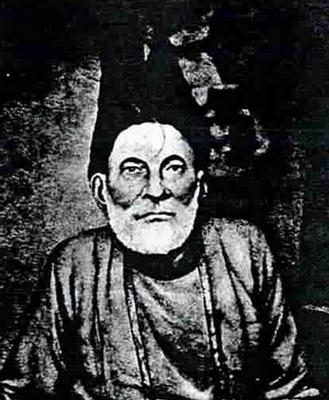
Ghalib-A-Day-Series: An Alcoholic

Couplet: 

ye masaail-e-tasawwuff , ye tera bayaan Ghalib

Tujhay ham Walli samajhtay jo na baada khwar hota 

Translation: 

Such matters of spirituality and your deep analysis on them, Ghalib


We would have considered you a saint, if you were not an alcoholic

Explanation:

Ghalib seems to be inspired by himself due to his remarkable insight on the complex matters of spirituality and religion. He says that he has all the qualities of being a saint except one - that he's an alcohol consumer. If he was not an alcoholic, people would have considered him a saint due to his broad vision and deep understanding of the spiritual matters.

Thursday, December 29, 2011

Vision against Propaganda

Sir Allama Muhammad Iqbal's historical presidential address in Allahabad introduced the Two-Nation Theory which outlined a vision for the creation of Pakistan on 29th December, 1930.

Muslims of the Subcontinent, who were supporting All Indian Congress to get rid of the British government, now had a different agenda. Iqbal's vision made them realize that Muslims would have to suffer even more once the Britishers are gone after restoring the power with the Hindu's.

Had it not been for Iqbal's vision, who thought for a separate land for Muslims on the ground of religion, Muslims would have been living as a minority with socio-religious  problems.

Does the campaign of 'Aman ki Asha' by Geo and Jang Group compliment with the Two-Nation theory of Iqbal? Can Muslims and Hindu's live in peace together having complete religious freedom? Which perspective is correct?  The one coming from a particular Media Group or the one from a great visionary philosopher?

You are the one to Decide.


Tuesday, December 27, 2011

Ghalib-A-Day-Series: Lover's Street

Couplet:

Phir tere kuche ko jaata hai khayaal

Dil-e-Gum gashta magar yaad aaya

Translation:

Once again my thoughts have taken me back to your street

But as I thought about it, I just remembered my lost heart

Explaination:

Ghalib's imagination takes a walk back to the street of his loved one where he seems to have some sweet memories. He now has not been in touch with his loved one so he is sentimental about his lost heart - the heart which he lost in that street of his loved one.

Monday, December 26, 2011

Ghalib-A-Day-Series: Silence

Couplet:

Hai kuch aisi he baat jo chup hoon

    varna kya baat ker nahi aati

Translation:

This matter is such that I am prevented from speaking of it


Otherwise what is there that I cannot speak of

Explanation:

Ghalib speaks about his helplessness on a complicated and a controversial matter which can raise many eye brows. Ghalib understands the sensitive nature of the matter so he decides to keep silent in order to avoid any controversy. He reminds his readers in the second part of the couplet that it's not as if he doesn't know how to play with words, but the sensitivity of the matter has silenced him altogether

Sunday, December 25, 2011

25 December: The Actual Date of Birth of Jesus (Pbuh)?

Background: A False Prophecy
The Jews of Jerusalem were awaiting a Messiah, who would end their slavery against the Romans - the governors of Jerusalem (the holy city to Jews and later to Muslims and Christians) at that time. Jews were shocked to know about the birth of a girl instead of a boy on the night when Messiah was predicted to be born. The girl that was born in the house of Imran, was named Maryam (A.S) or Mary. Jews were disappointed at nature's decision and hence they never really gave Mary the due respect although she was a pious lady. When she gave a miraculous birth to Hazrat Eesa (A.S) or Jesus, they alleged her of adultery.

Reason Why Jesus was rejected by his own people:
Jesus was never accepted as a prophet by his own people because they were told in their distorted holy books that the Messiah would be from the lineage of Hazrat Daud (A.S) or David and since Jesus (A.S) was born without a biological father, his lineage was from his maternal grandfather (who was not from Daud's descendents).

Jesus was sent to Bani Israel, as a Muslim just like Moses:
One important clarification which even most of the Muslims today are unaware of is that Jesus was sent to Bani Israel, as a Prophet of Allah and as a MUSLIM. Jesus (PBUH) did not lay the foundation of Christianity. According to the New Testament of Holy Bible, Jesus has quoted the fact that he was sent to the 'Lost sheep of Israel'. Christianity never existed at the time of Jesus (PBUH) or before him. There's no doubt that Jesus (PBUH) was just one out of thousands of prophets that were sent to the people of Israel as Muslims.

Alleged Crucifixion that never really happened:
Jesus (PBUH) was given a scripture - Injeel (not the current bible), which was revealed to restore the true message of the distorted Toraat (Torah). Some of the influential but corrupt Jewish Rabbi's (just like Islamic Maulana's) saw this as a threat to their own agendas. They conspired with Roman authorities by implicating that Jesus of Nazareth was trying to brainwash the local people against the Jewish as well as against the pagan Roman religion. The authorities ordered to crucify Jesus (PBUH) however according to Islamic belief, they couldn’t do so and Jesus (PBUH) was lifted to the heavens alive.

12 Apostles of Jesus (PBUH):
The Question arises that how did the Christianity came into existence? Hardly 12 people, who are known as the apostles of Jesus Christ, embraced his message and after the alleged crucifixion, those apostles traveled across distant regions to preach the message of Jesus (PBUH) . The prominent apostles were Mark, Luke, Thomas, Matthews, John, Barrabas, Peter and Paul.

Reality of Barrabas, the Apostle: 
Out of the 12 apostles, Barrabas was more closer to Jesus and possessed the original Injeel. He also authorized the authentic compilation of life of Jesus (PBUH) but due to the propaganda of various origins - which is a separate debate, Barrabas is never considered to be a prominent apostle by the Christians today. The original injeel was taken from him and was kept hidden. He is portrayed as a thief in the modern Gospels, who was set free in a swap to the crucifixion of Jesus - a shameful example of historical inaccuracy. Such a portrayal of a prominent apostle gives rise to the suspicion overlying the Christian faith itself.

The Foundation of Christianity as a Religion:
Gospels were written by Luke, Mark, Matthews and John. All of them claimed that their Gospels were a word of God. Interestingly , each of the four Gospels contradict from one another at various places. Paul and Peter went to Rome and were able to convince a huge number of Pagan Romans to the teachings of Jesus (PBUH). Paul, famously known as Saint Paul, in additions to the original teachings of Jesus, also added various other aspects into his preachings. Hence, Saint Paul but not Jesus (PBUH), is the founder of Christianity. The religion of Paul spread like a wildfire.

Constantine the Roman becomes a Christian:
The Roman emperor, Constantine the Great, was converted to Christianity and so did the Roman empire. He called a gathering of the representatives of all the different sects of Christianity in 325 A.D. The sect which truly believed that Jesus (PBUH) was a true prophet of God still existed at that time but their numbers were scarce. Constantine burned all the different versions of Gospels except for the above mentioned four and made further changes in them. Real sample of Injeel was again kept hidden and was sent to Vatican.

 Sun God, Not the Son of God:
Constantine made the amendment in Christianity faith by imposing that Jesus was 'Son of God' (Nauzubillah). Constantine was of Pagan origin (worshiping different gods). It is to be noted that he never became a Christian by his heart. He used to worship 'The Sun god' who lived in 3000 B.C and was worshiped by Egyptian and Roman Pagans. The date of Birth of The Sun god according to Roman calendar was 25th December. Constantine killed two birds with one stone . For his Christian fellows, he associated this day of 'Sun God' as the day of 'Son of God (Jesus)'. Note the similarities between ‘sun’ and ‘son’ when you pronounce it. So basically he made half of the world's population to worship and remember his Pagan God instead of what people thought. Have you ever thought about Christianity’s Cross sign? Why would they symbolize their religion with something which is associated with the death of the person they brag about being as son of the God? Jesus was Crucified according to the Christians on a cross so why is it Holy for them? The answer is simple. Cross was a distinctive method of giving deaths to people by the Romans, and Constantine was a Roman.

Jesus (PBUH) was not born on 25th December: 
It is evident that Jesus (PBUH) was not born on 25th December. The forefathers of early Christians, the Jews, rejected the message of Jesus, raised fingers on his mother's character and helped the Roman pagans to crucify him. How could they note down the date when a son was born to a women whom they hated right from the day when she came into this world? They didn’t even accept Jesus as a prophet rather they accused him of blasphemy. His apostles were not even there at the time of his birth. So who could have given an exact date of the birth of Jesus (PBUH) when he was even rejected by his own people? Think about it. Do not glorify an ancient Pagan’s Sun god by thinking that Jesus was born on this day. 

This was a Historical background to prove that Jesus was not born on 25 December. The Religious proof from the Holy Quran on the same topic will discussed later.

Saturday, December 24, 2011

Ghalib-A-Day Series: Better Expression of Love

Couplet:

Ya Rabb Na Wo Samjhay hain na Samjhaingay meri baat

Dey Dil Aur he unko, Jo na dey mujhko zubaan aur...

Translation:

O God, she doesn't, nor will understand me

Give her a wiser heart, if you wont give me a better expression.


Explainantion:

Ghalib seems to be dejected by the fact that his loved one is unable to understand the hidden hints of love and affection that he has been trying to give her. He expects things not to change either and is hopeless in her regard. But the next thing he does is to pray to God that either He would soften her heart and make her wise enough so that she could understand his love for her, Or either God teaches him a better way of expessing his feelings, so that she is able to understand the love he has been trying to show.

Rafi - The Legend

24 December 1923 - a day when arguably the best playback singer of Hindi Cinema was born. It has been more than three decades since the demise of the great Rafi, as he rightly mentioned in one of his songs : 'Ye zindagi ke melay dunya mai kam na hongay, afsos ham na hongay'  - Translation: The amusements in the world will not come to an end but alas, we'll be no more.

May his soul rest in peace.

Tuesday, December 20, 2011

Ghalib-A-Day-Series: Hypocricy

Couplet:

Kahan maykhaanay ka darwaaza Ghalib aur kahan waaez

Par itna jaantay hain kal wo jataa tha ke ham niklay

Translation:

Door of the Tavern and a preacher are two entirely different things

 but I saw a preacher going inside a tavern yesterday as I was coming out of it.


Explanantion:

Ghalib describes the double-faced nature of some of the preachers or so called molvi's of his time. This couplets tries to explain that idealy, a saint and a place like tavern- where alcohol is consumed, should be poles apart. But in reality, those hypocrites who mask their faces and hide them under the cover of religion, are themselves involved in the activities which they tell others not to do.

Ghalib tries to indicate that even though he himself may not be a pious one, as he visits the tavern as well, but atleast he does not hide it from anyone because he does not fear what people say. He is trying to say that he visits the tavern at a public time without any fear unlike the preachers, who wait for the dusk to take control before going to the tavern, so that no one is able to recognize them. This act, according to Ghalib, is an act of hypocricy which according to him, is a graver sin than the consumption of alcohol.

Monday, December 19, 2011

Ghalib-A-Day-Series: Prison of Life

Couplet:

Qed-e-hayat o band-e-gham asal mai dono ek hain


Maut se pehle aadmi gham se nijaat paaye kyun.....


Translation:

The prison of life and the bondage of grief are one and the same

Before the onset of death, how can man expect to be free of grief?

Explanation:
Mirza Ghalib has gone philosophical in this couplet by describing life as a 'prison'. An imprisonment which is imposed on every soul without a warrant and a crime.

Ghalib describes the prison of life and the bondage of grief as one and the same. In his view, it is impossible for a person to set himself free from the harsh prison of life and the cruel tragedies that are encountered throughout the life itself. The only way out or perhaps the only bail out of the jail of life and bondage of grief is death; the death which has no specific time.

Tuesday, November 8, 2011

Paulo Coelho's Aleph: A Book Review

Paulo Coelho takes his readers to an adventurous journey across Russia through the never ending Trans-Siberian train in his new book, Aleph.

Aleph, as described in the book, is a place of convergence of time and space. The book is an autobiographical account of Paulo's journey to 'rediscover' his spiritual self during the year 2006.

The initial portion of book reminds of The Pilgrimage, Paulo's previous work, where he is talking about a ritual with his Master. The book, however, takes a completely different route in the following chapters.

Aleph is about time-less love. It is about seeking forgiveness and repentance for past mistakes. It is about reincarnation and spiritualism. Aleph is one of the most personal novel written by Paulo Coelho.

Aleph tells the story of Paulo Coelho's magnanimous journey across 3 continents in 6 months in search of spiritual growth. It reflects upon Paulo's life as a writer and how the matters are arranged with his publishers worldwide. It tells the role of Yao- Paulo's translator during the journey, in assisting Paulo's search for spiritual peace. It tells the story of Hilal and her relationship with Paulo- a relationship that lasts for centuries.

If Alchemist was too much fiction and The Pilgrimage was too much spiritualism for you, The Aleph is a blend of everything which makes it one of the finest work of Paulo till date. Highly recommended.

Tuesday, October 25, 2011

Mohsin Khan as Chief selector: Give the Credit where it is Due

Take a look at the following scenario:


A humiliating tour of Australia followed by stepping down of the Chief selector; Indefinite Life-bans on several star players along with heavy fine on others; few key players out of the side due to injuries and a much speculated player power in the team. This was the time when Mohsin Hassan Khan took over the charge as a Chief Selector, with a tough task of choosing a team from a very limited pool of individuals.
Mohsin Khan selected the team for T20 World Championship in Carribean, Asia Cup and the England tour. Induction of new players to replace the old ones in order to rebuild a team was bound to take some time in order to make any impact. As the young unit was coming in terms with international level, another jolt of 'spot fixing' came out on the scene which resulted in the ban of 3 integral members of the squad to make it further worse for Mohsin khan. These were the initial 6 to 7 months of his tenure; the worst possible.
Mohsin Khan
Today, almost a year later, there has been a complete turn around, a miraculous one. The Test side of Pakistan has never been this stable and consistent in all those past years. The One day squad has depth and the bench strength is heartening to see. To build and erect a shattered team on its feet in just about a year's time is a remarkable achievement. Let's take a closer look at Mohsin Khan's tenure as a chief selector.

The analysis will be according to the Test match side as this format of the game requires more stability than the limited overs cricket- in which teams can afford to experiment with their combinations every now and then. 

  Pakistan Team was struggling to make an impact as a solid Test playing country with dismal performances in Sri Lanka and Australia while managing a drawn series in New Zealand. After disciplinary actions were taken on several big names like Younis and Yousuf, Mohsin Khan faced a challange to select an inexperienced team for the difficult tour of England in 2010, which included 6 Tests in total. This was the first time Azhar Ali, Umar Amin, Zulqarnain Haider and Wahab Riaz were selected in the Test side. As expected, the team combination could not settle during the tour, because the team was still in a rebuilding phase with number of its key players out of the side for diverse reasons. To put salt on the wound, first Afridi and then Salman Butt had to leave the captaincy after the tour. Azhar Ali and Wahab Riaz justified their selection though.
South African series in UAE was a turning point in revival of Pakistan's test position. A shocking appointment of Misbah as a captain, rebirth of Younis as a player and a promising start to Azhar Ali's career suddenly provided the middle order with a much needed stability. Asad Shafiq's debut performance was highly encouraging. But the most important selection for this tour were the openers; Hafeez and Taufeeq. Both earned their places through strong domestic performances and for some of you, who have been following Pakistan's test cricket for a long time, it will be a surprise to see that these two have opened together consecutively in last 8 Test matches of Pakistan, which has always been a  rarity in unstable batting line up. 


The Team since than has more or less been the same along with being consistent. They had a drawn Series against South Africa and West Indies while a series win over New Zealand and Zimbabwe. Top 5 batsman have a guaranteed place in the side which include Toufeeq, Hafeez, Azhar, Younis and Misbah, due to their strong consistent performances. Number 6 has been closely fought by two young talents, Umar Akmal and Asad Shafiq, so this place is relatively open to any one of them along with Shoaib Malik to a lesser extent. Adnan Akmal is yet to prove his talent with bat but his glove-work has been better than the older Akmal for sure. He was also selected by Mohsin Khan for the South African series. Bowling department, after many experimentations, have a bunch of names which were scarce when Mohsin Khan took over. With a bowler like Wahab Riaz struggling to find his way in the playing eleven, the fast bowling department has a certain depth. Junaid and Cheema have been a promising finds along with Tanvir Ahmad in reserve. Umar Gul, being the spearhead, is leading the bowling attack with responisibility. Saeed Ajmal and Abdur Rehman fill the shoes of spinners. Pakistan's Test side has never looked this settled.


Who would have imagined to see Pakistan cricket team in its current balanced outfit after the miserable tours of Australia and England last year? The credit goes to Mohsin Khan for transforming a shattered team into a stable unit. May be I am going too far but Mohsin Khan, according to me, has been the most successful Chief Selector Pakistan has witnessed in the last few years.

Noisy Niazi

She walks like a guy, talks like a guy and gawks like a guy. She's the MAN of her group. She has everything in her style which discriminates her from being a girl. She's Bossy, She has a masculine gait, She's high on pranks, She's always over the top with her voice - She is a 'Noisy Niazi'.

On a tense day of an Exam while students are going through last-minute revision, the Niazi leads her group into the cafe with her characteristic care-free gait, headphones in her ear and hands inside the pockets of her jeans. She orders a cup of tea, sits back and shuffles the play-list on her Ipod while her friends are suffering from pre-exam panic disorder. She grabs a book about 10 minutes before the start of exam; goes through the pages halfheartedly; cheats to the maximum fearlessly in the examination hall and eventually gets more marks than her friends. She celebrates her 'minimum input maximum output' effort in a loud voice - She's a 'Noisy Niazi'.


She's notorious. She has a dominant personality but there's the other side of coin too. The Noisiness of Niazi is restricted to the premises of University only. Back home is a complete turn around of her personality. She restricts herself to her room. The play-list shifts from heavy metal to sentimental. The notorious spark of eyes are transformed into tears. The person, who boss around others during the day, has almost no control over her own emotions back home.


She's very much a girl for her close friends. She speaks softly in a beautiful voice. She likes to dress and wear make up like a girl. She likes to be looked after. She's caring and she has a quality to absorb the pain of others. She has a soft heart; Not-so-Noisy Niazi.

The reason for this split personality is even unknown to her. Even if it is a broken heart or any familial problem, one thing is clear for sure; a person, who tries to be strong in front of others having a fake smile, is the one who is empty inside. She may sound noisy to other but deep inside, she is as calm as standing water. Although the Niazi is noisy for others, so is the Volcano, which remains silent for most of its life.

Monday, October 24, 2011

PPP, Qaddafi and Nusrat Bhutto

Within a span of last few days, Pakistan Peoples Party has lost two of their close affiliates. Nusrat Bhutto, wife of the party founder, Zulfiqar Ali Bhutto and Colonel Muammar Al-Gaddafi. Yes, you have read the name correctly - Qaddafi. Both deaths, however, have met with obvious discrimination by PPP.

Qaddafi's sad demise is a matter of concern for Muslims all over the world. Fine, he was a tyrant and he carried out some controversial actions during his rule but he was a strong and influential political leader for the Muslim world. Qaddafi was the first Leader who declared his support for Pakistan to pursue the development of Nuclear weapons against the will of United States during Zulfiqar Ali Bhutto's government. He was in tremendous relations with Pakistan during Bhutto's government and It was Qaddafi who gave Pakistan the honorable title of 'Fort of Islam', which we Pakistani's brag about without remembering the actual person who came up with it. Qaddafi's subsequent relations with Zia and Nawaz Shareef were horrible. The relations were back to normal during Benazir Bhutto's government. In short, Qaddafi had a prosperous relationship with PPP, the current governing party of Pakistan.

A public holiday was observed today after the sad death of Nusrat Bhutto along with the announcement of 10 days of grief. She had been battling hard with death while being on a ventilator for few years now in Dubai. She was the one who kept the Party on its feet after the death of Zulfiqar Ali Bhutto and it is mainly due to her efforts that were made in those tough circumstances that PPP is in the government today.

I question the logic of a public holiday on the death of a person who was surviving on a ventilator since last 4-5 years. In a country like Pakistan where we are facing economic, electrical and industrial crises, three consecutive holidays is nothing less than a suicide. Where our government departments should work 7 days a week to overcome the shortcomings in every field, they are working 4 days a week. Ridiculous!

On one hand, the government is being gracious to this nation by providing them with an extra holiday on the death of a person who had been dying each moment for the past few years on vent but on the other hand, there has been no condolence over the brutal humiliation, before and after the death, of a person who was a staunch supporter of the founder of PPP, the current government, by the hands of rebels and NATO in front of whole world. Don't you think the current government should have shown some concern over the demise of Qaddafi and treated it equally with the death of Nusrat Bhutto?

Sunday, October 23, 2011

Famous Personalities with Depression

Depression is well known as 'The Silent Killer'. It is a state of low mood that can affect a person's thoughts, behavior, feelings and physical well-being. Depressed people may feel sad, empty, hopeless, helpless, anxious, worthless, guilty and restless. They may lose interest in activities that once were pleasurable. Depressed people may restrict themselves from family and social life altogether. Depression comes under the field of Psychiatry - a branch of Medicine.

Prevalence of this state of low moods among common people is widespread but there have been a number of famous people who have also suffered at the hands of Depression. The list includes the following:

1) Lady Diana, Princess of Wales: She might have been a princess to world but in hearts of hearts, she was a normal person. Diana's married life was never a perfect one. She died ultimately in a road accident near Paris.


2) Heath Ledger, An Australian Actor: Joker of 'The Dark Night' had almost nothing to laugh about during the last days of his life as he suffered from severe depression. Overdose of drugs brought his life to a full stop.

3) Eminem, An American Rapper: As obvious from some of his songs, his family life has always been in tatters. Eminem went into severe depression which kept him out of the scene for a good few years. Fortunately, he went into a Rehab and has recovered well. His new album, 'Recovery', speaks clearly for his revival.


4) Christian Bale, A British Actor: Batman of 'The Dark Night' also went through a severe depressive phase before his back-with-a-bang effort as a new Batman.

5) Isaac Newton, a British Physicist: He was probably in a state of depression while he was sitting under an apple tree and following his law of gravitation along with other discoveries, he has been a cause of depression among physics students worldwide.

6) Britney Spears, An American Pop Star: Another pop star who has been undergoing a rehabilitation after severe depressive state.

7) Abraham Lincon, 16th U.S President: Due to early death of his sons, Lincon went into a condition of Melancholy- Clinical Depression, before being assassinated in 1865.

8) Ronnie O'Sullivan, An English Snooker Player:  3 times World Champion in Snooker, O'Sullivan suffers from clinical depression and has had drug related problems.

9) Michelangelo, An Italian Painter and Sculptor: Michelangelo, the greatest sculptor of all time, was known to be anti-social and was often known to be in a lonely and depressive state. He never used to care about his outlook and the impression he used to leave on people.

10) Angelina Jolie, An American Actress: Angelina Jolie had a tough 1997 when she had a horrible experience with drugs and depression. She even thought about hiring a Hitman to kill her and she remained in a Psychiatry ward for 3 days just before her marriage. She's a top Star and an active social worker now.